Photo by RJ Wilner
This was the second Photo Flood in Belleville IL. The first was on May 8th, 2021. The article for that flood can be found at https://www.photofloodstl.org/photo-flood-105-belleville/
Photo by Joe Sardo
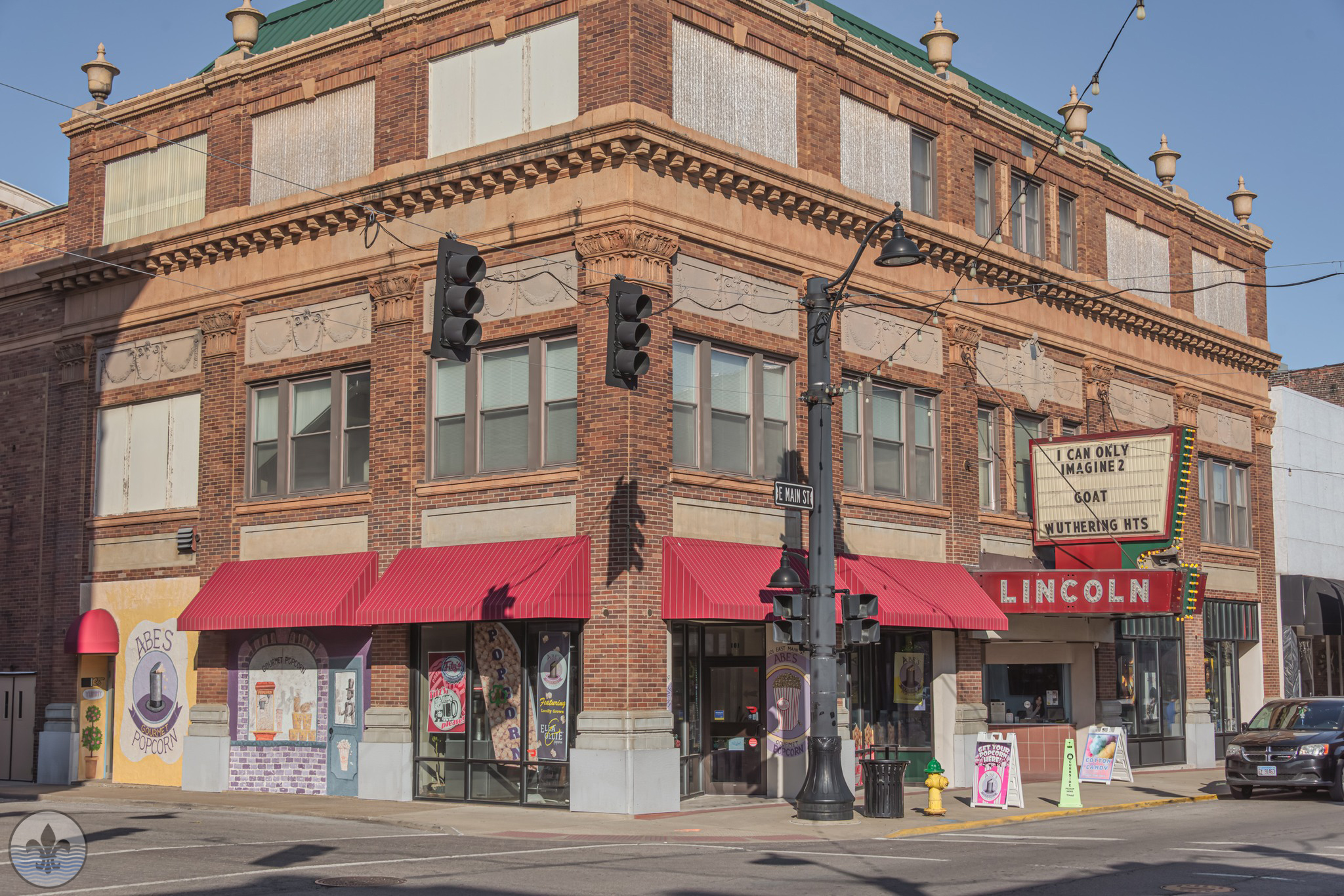
This flood was held in conjunction with a book signing at Belleville Books by Photo Flood’s founder Jason Gray. Jason gave a great presentation and when the signing was over the flood started. The Belleville Books building is a former bank located downtown on East Main St. It makes a great setting for a book store, which still includes the vault and its massive door. There are many architectural details still in the building. On the second floor conference room there are some wonderful glass windows that are a hidden gem. The owners graciously allowed us to go up and see them.
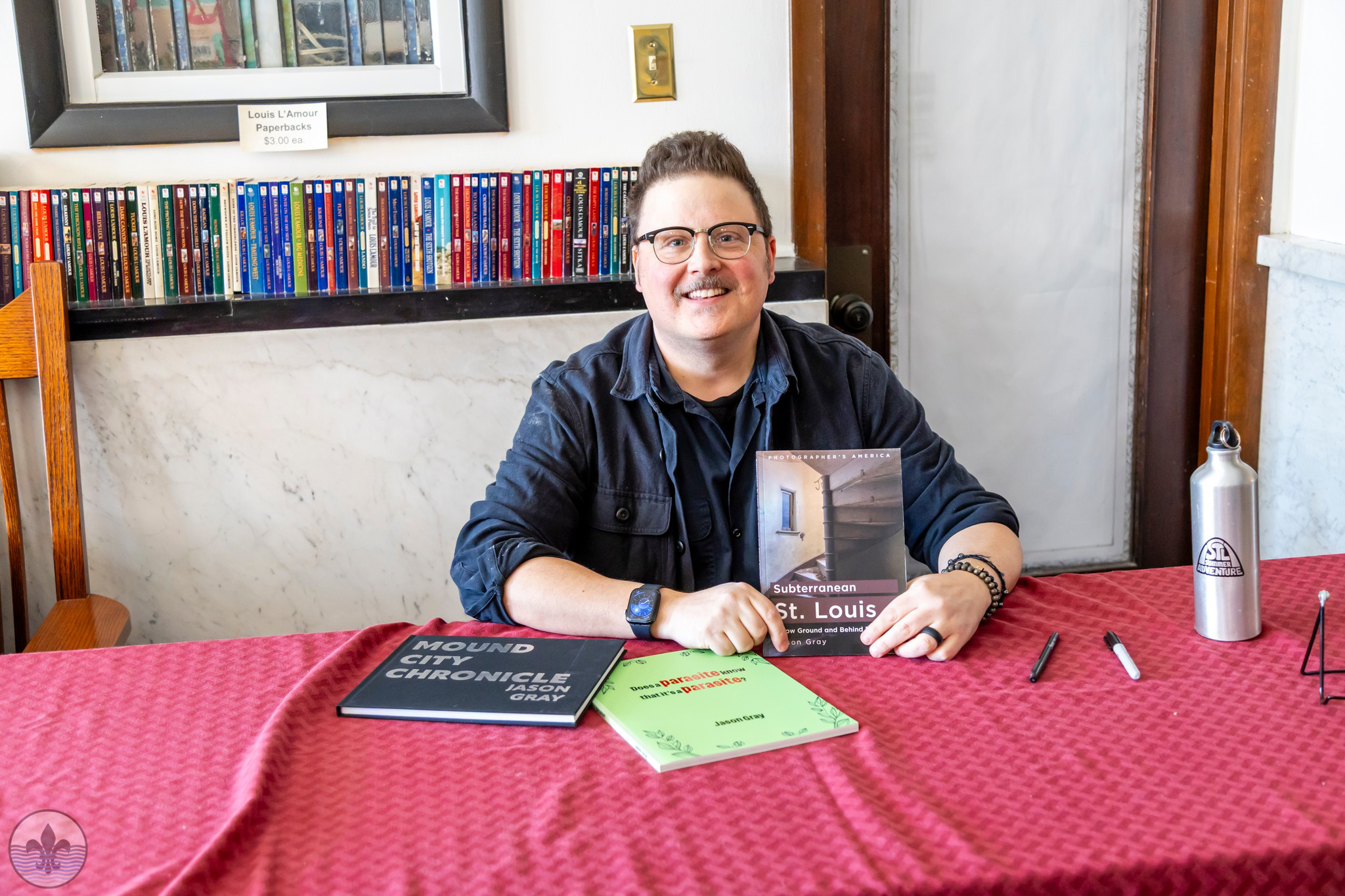
Photo by Mike Matney
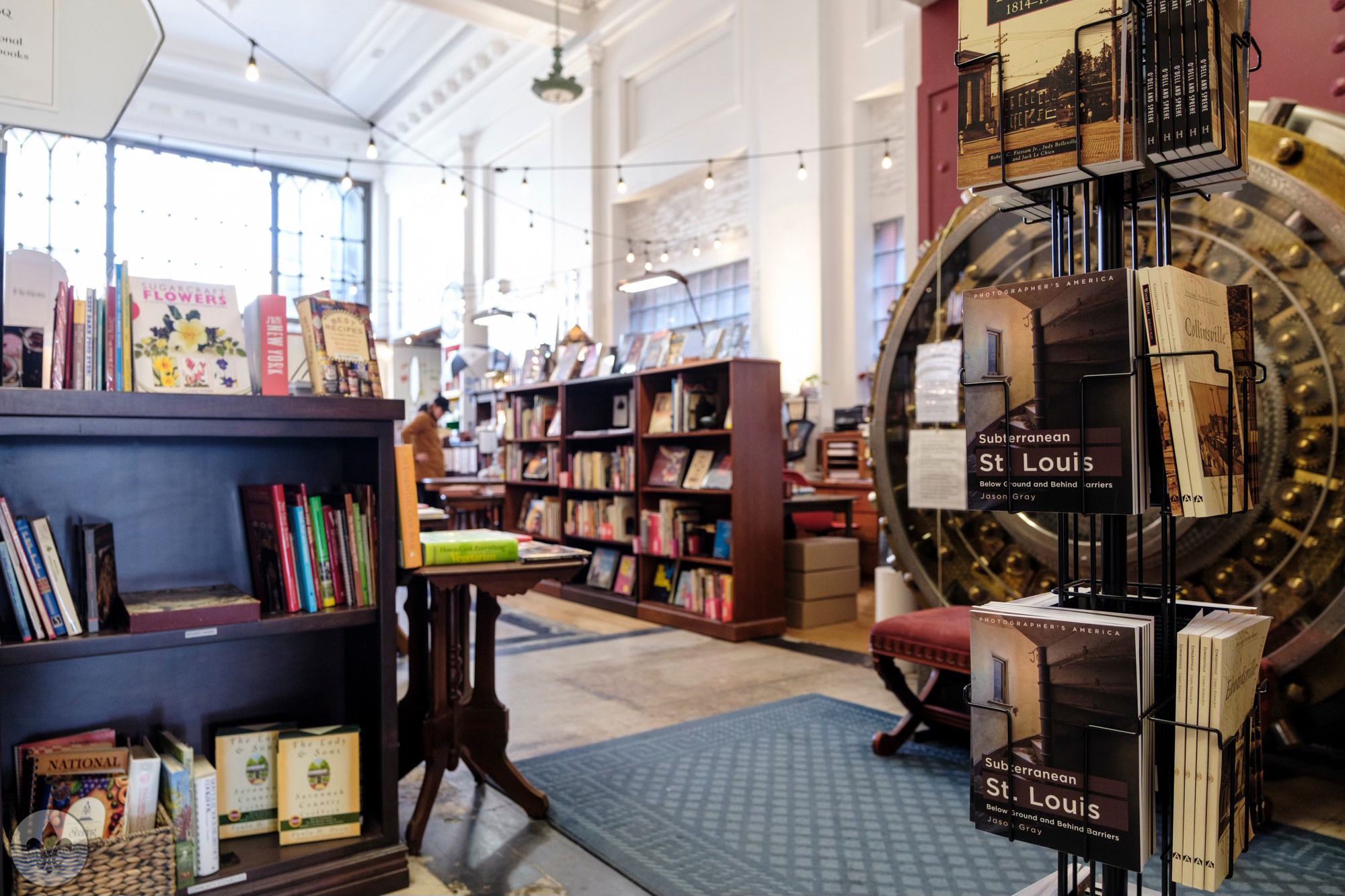
Photo by Jason Gray
Photo by Caren Libby
The city of Belleville was founded in 1814 by George Blair. He donated one acre of land on March 10th, 1814 for a Public Square. As a result, the county seat of St. Clair County IL was moved from Cahokia IL to Belleville IL. At the time, Belleville was the more centrally located settlement in comparison to Cahokia. The name Belleville (beautiful city in French) was chosen because Mr. Blair believed that a French name would attract new residents. It was officially incorporated as a village in 1819, and became a city in 1850.
Photo by Theresa Harter
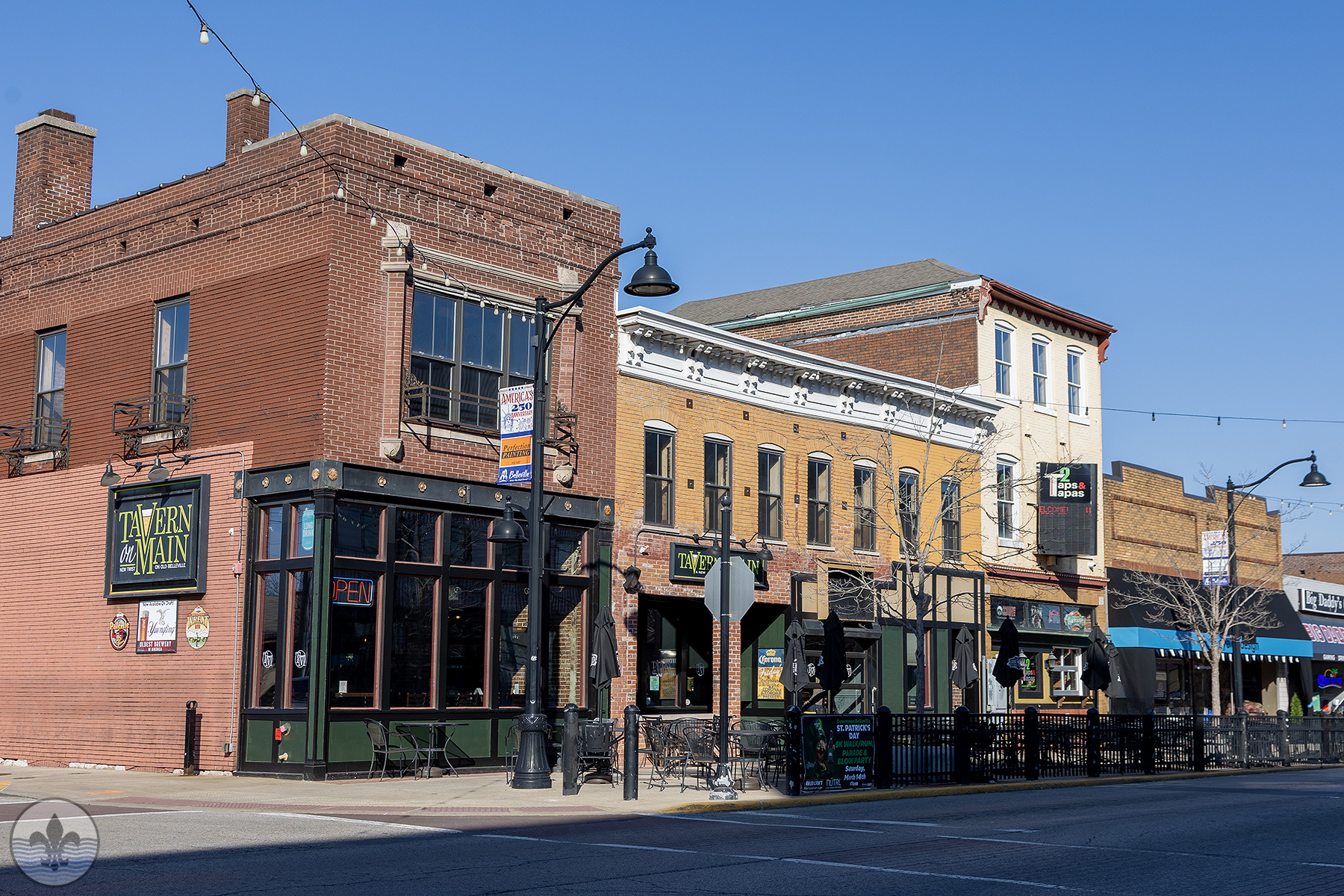
Photo by Caren Libby
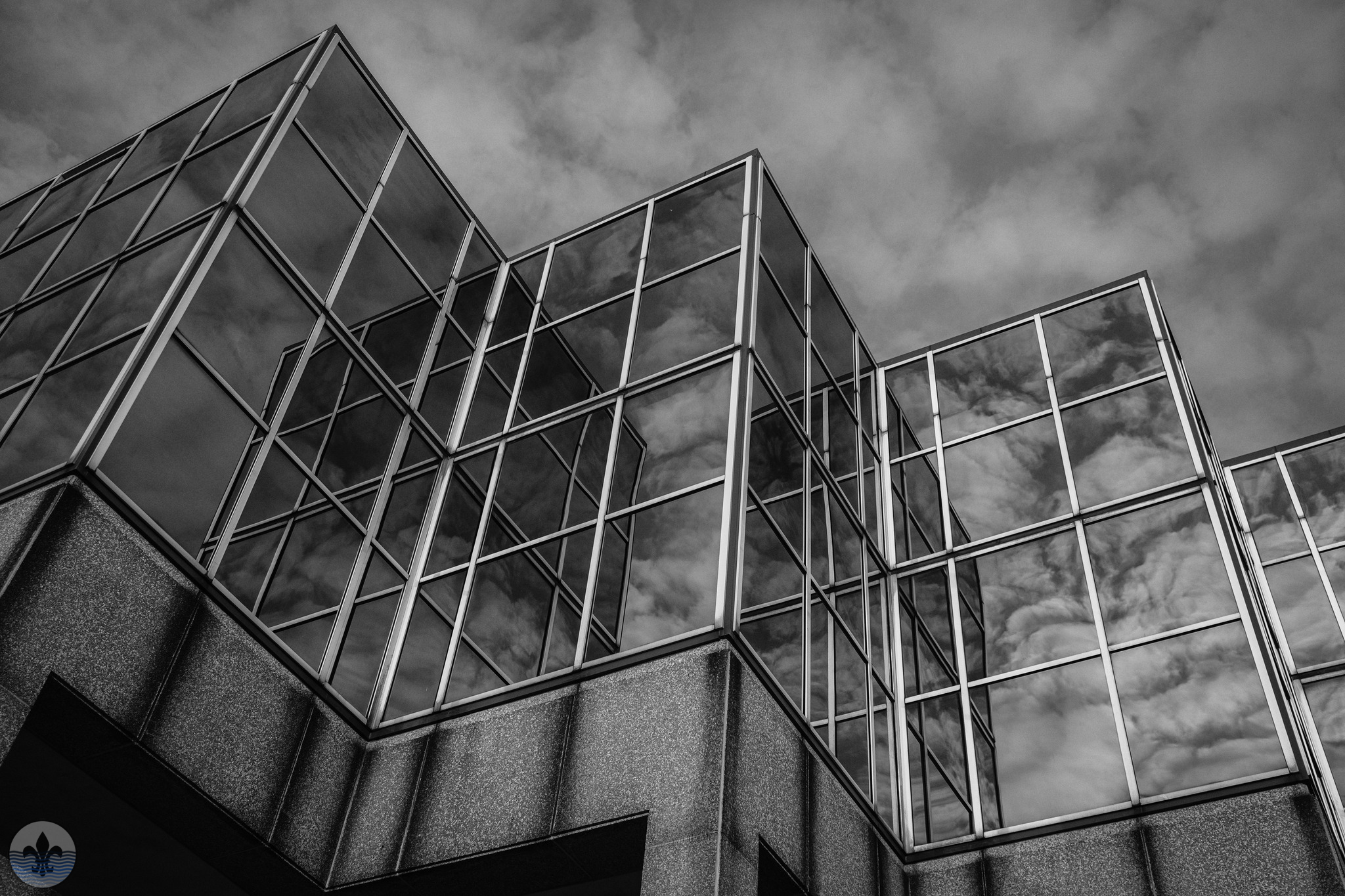
Photo by Ryan Archer
In the years after the Civil War Belleville became a manufacturing hub, producing printing presses, iron castings, nails, agricultural equipment and stoves. From the late 1800s to the 1940s, the city was known as the “Stove Capital of the World.” The first enameled stove was made here, and the “Jacketed Stove” was invented here. In 1868, Gustav Goelitz found the candy company that is now known as Jelly Belly.
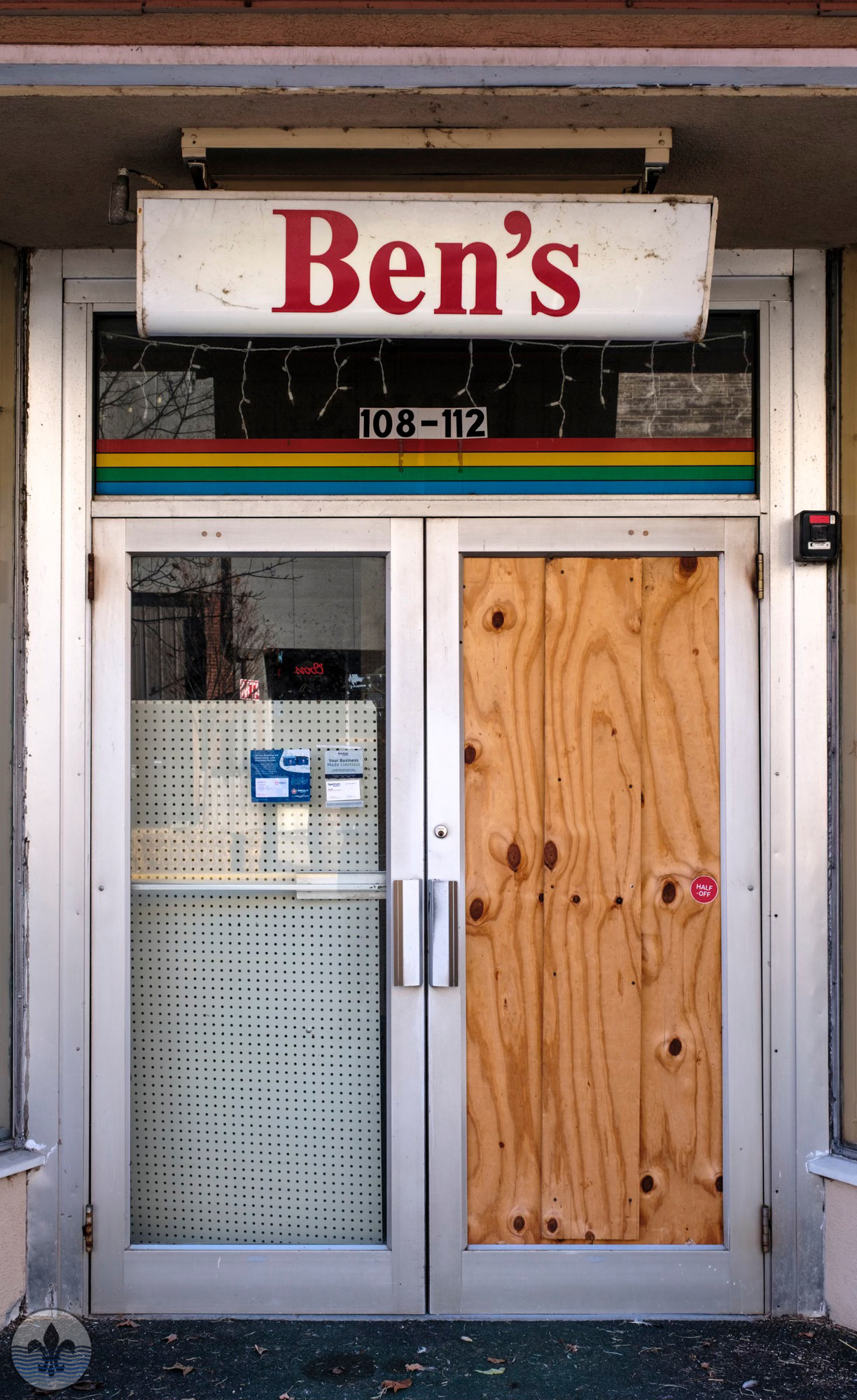
Photo by Jason Gray
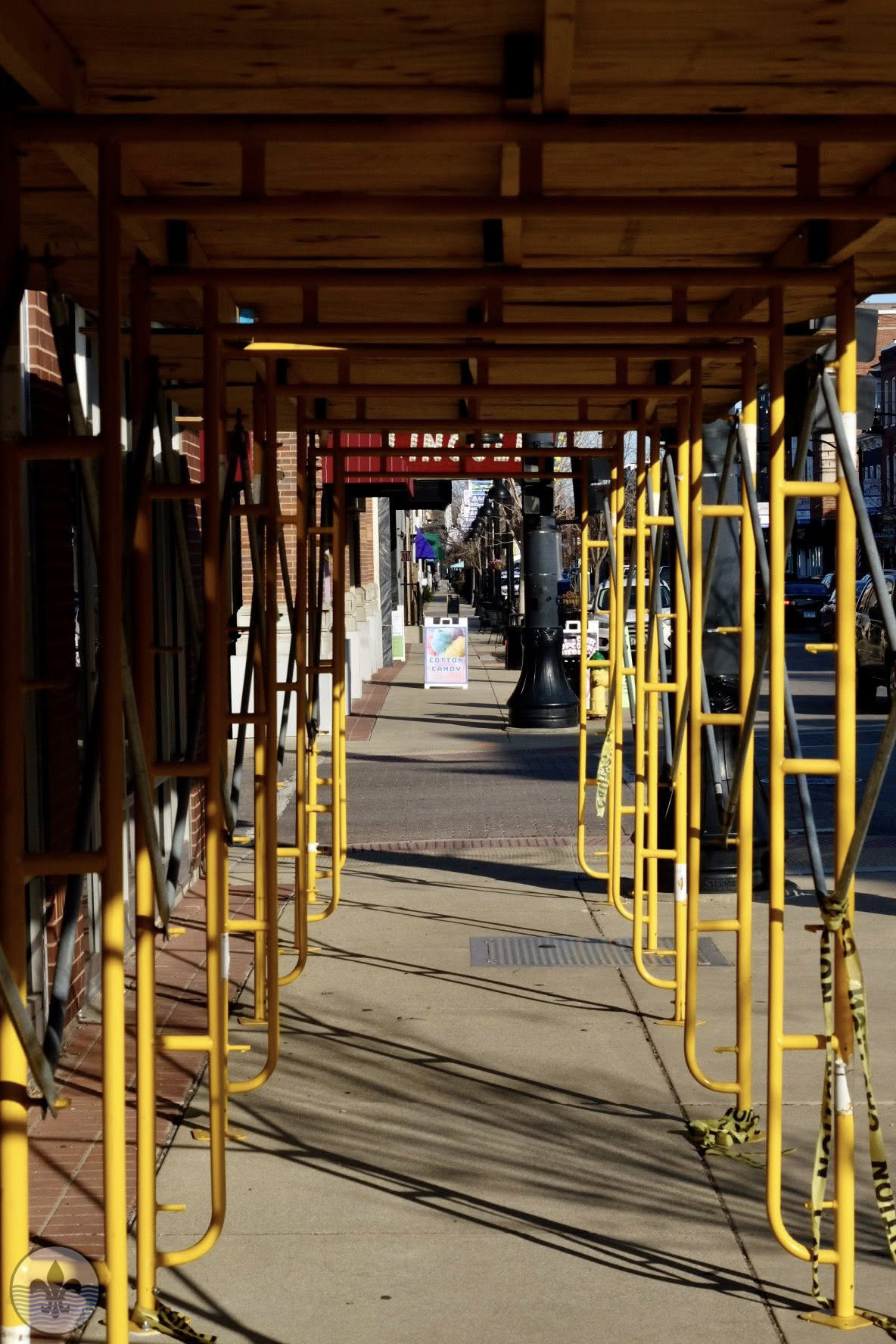
Photo by James Palmour
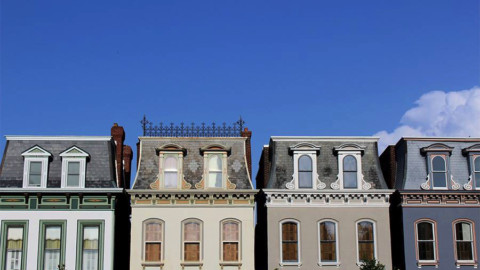
While Belleville was a French name, the major cultural influence was German. In 1824 German author Gottfried Duden published a book about the area, which influenced many well-educated and successful German immigrants to move to the area. German immigrants began settling in Belleville in large numbers during the 1830s. They brought with them simple brick architectural designs. This architecture can be seen the city’s older neighborhoods of Belleville’s Historic District: Hexenbukel and Oakland. The German immigrants also brought beer brewing to the city. The very first brewery in Illinois was in Belleville., and at one time there were as many as seven breweries in Belleville. The most iconic, Western Brewery eventually became Stag Beer, a Midwest staple. The Belleville Stag Brewery closed in 1988.
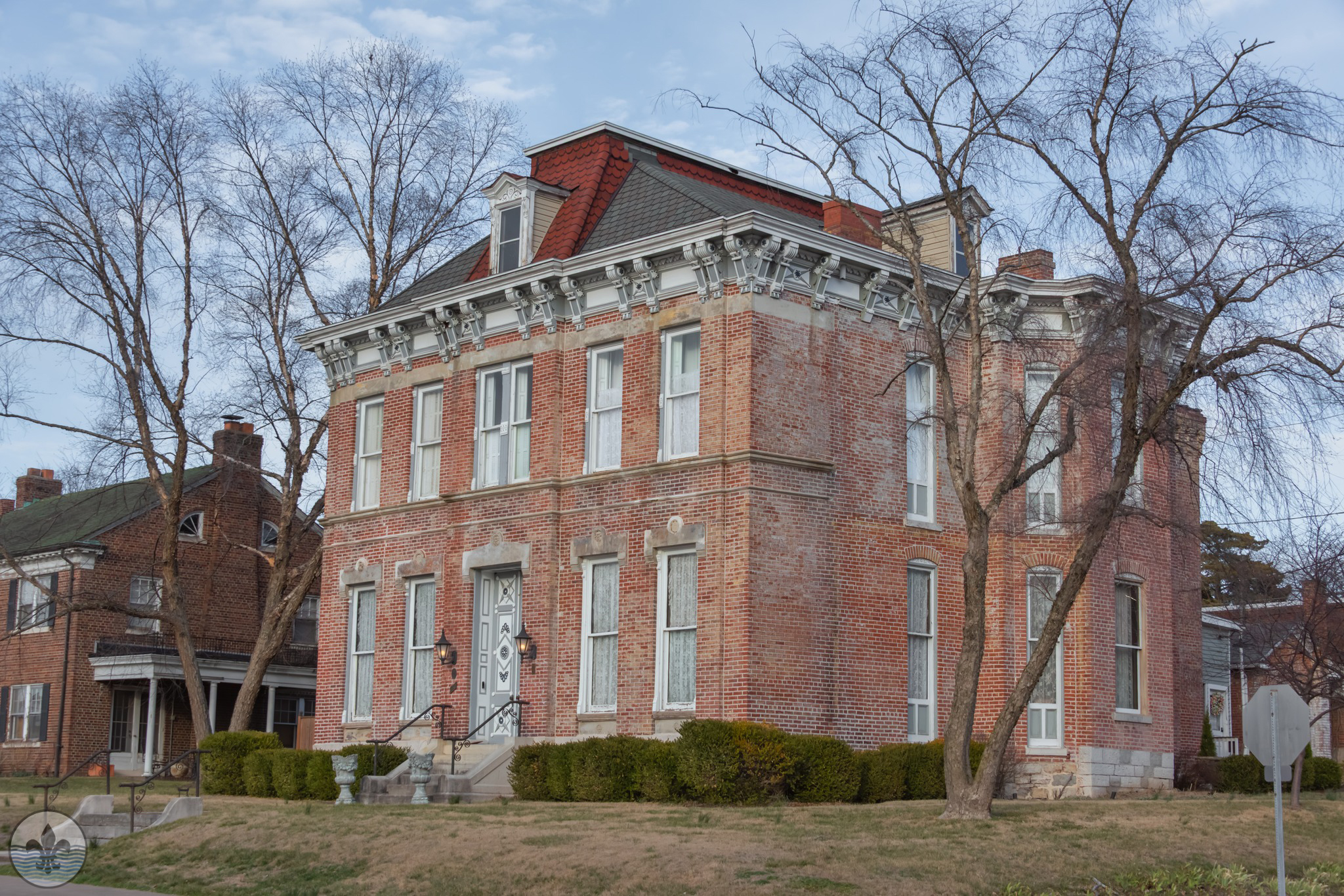
Photo by RJ Wilner
Photo by Joe Sardo
Photo by Claire Weiss

Photo by Dennis Daugherty
Photo by Ryan Archer
Belleville is located just west of Scott Air Force Base, is home to the National Shrine of Our Lady of the Snows, and Roman Catholic Diocese of Belleville. Nearby Eckert’s farm draws in many tourists with its strawberry fields, country store charm, and extensive orchards. Belleville also still has a drive-in movie theater, the Skyview which is a very popular spot during its open season. It is the 8th largest city outside of the Chicago metropolitan area, and most populated south of Springfield.
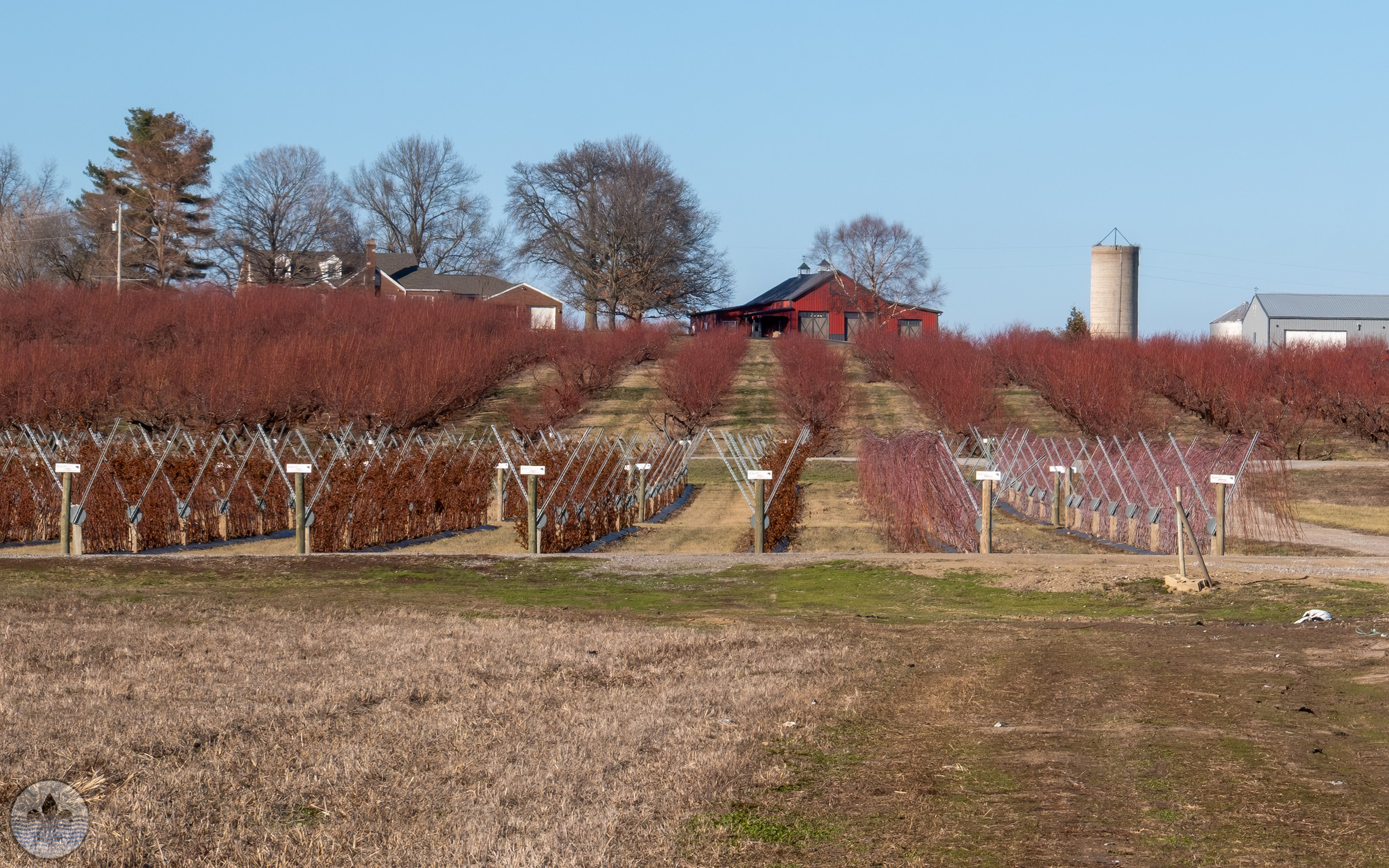
Photo by Irene Griggs
Photo by James Palmour
Photo by Dennis Daugherty
Photo by James Palmour
Photo by Joe Sardo
Bellville has a very rich history and is well worth exploring. We barely touched the many neighborhoods within the city on this outing. I am sure that Photo Flood STL will be back yet again in the future.